Posted July 31, 2025
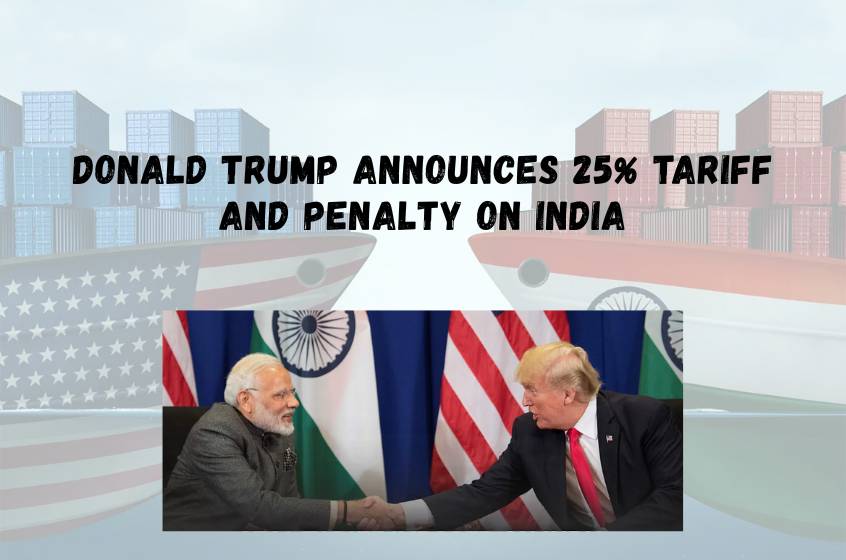
Donald Trump Announces 25% Tariff and Penalty on India
Introduction
In a move that sent shockwaves through international trade circuits, former US President Donald Trump announced a sweeping 25% tariff on all Indian goods starting August 1. What came as a bigger surprise was the undisclosed penalty slapped on India for its continued trade and defense ties with Russia. The announcement was made through Trump’s TruthSocial post, reigniting debates on trade wars, geopolitical allegiances, and protectionist economics.
What Did Trump Announce?
Tariff Details
Trump stated that a flat 25% tariff would be imposed on Indian imports, calling out India for unfair trade practices. According to him, the Indian tariff regime is one of the “highest in the world,” creating an uneven playing field for American businesses.
Penalty Clause Explained
Besides the tariff, Trump imposed an additional penalty, though he didn’t reveal the amount or scope. The penalty, as per his post, is related to India’s strong military and energy trade relations with Russia.
Trump’s Reasoning Behind the Tariffs
India’s Trade Barriers According to Trump
In his post, Trump accused India of having “strenuous and obnoxious non-monetary trade barriers.” These include restrictions on foreign businesses, import regulations, and high duties on sensitive products like agriculture and dairy.
Energy and Military Ties with Russia
Trump criticized India for being Russia’s largest buyer of energy and military equipment, stating that such behavior undermines international efforts to pressure Russia to end the war in Ukraine.
Historical Context
Past Tariff Tensions Between US and India
This isn’t the first time Trump has targeted India with tariffs. Back in 2019, during his presidency, the US revoked India’s GSP (Generalized System of Preferences) status, citing lack of market access for American goods.
April 2nd Tariff Move and Its Suspension
Earlier this year, Trump proposed a 26% reciprocal tariff on Indian imports. The implementation was delayed twice — once in April and then again in July — under the hope that a trade deal would be reached. That deal, however, never materialized.
The Bigger Picture: India–US Trade Relations
Trade Volume Overview
India–US trade stood at $128.8 billion in 2023, with the US running a trade deficit with India. Key Indian exports include pharmaceuticals, textiles, IT services, and automotive components.
Key Trade Sectors at Stake
US exporters want greater access to Indian markets in areas like electric vehicles, wine, apples, dairy, and genetically modified crops — all of which face resistance from Indian regulators and farmer unions.
Sectors That May Be Hit Hardest
Pharmaceuticals and Generic Drugs
India’s thriving generic drug industry could face pricing pressures if American importers pass on the cost of tariffs to Indian manufacturers.
Automotive Components and Parts
India is a major supplier of auto parts to the US, particularly to Detroit-based automakers. These manufacturers may now seek alternate, cheaper suppliers.
Textiles and Handicrafts
This sector, mostly driven by SMEs and rural artisans, will be particularly vulnerable as US buyers look for tariff-free sourcing alternatives.
Agricultural Exports
Although relatively small in volume, India’s rice, tea, and spice exports to the US could take a major hit, especially if retaliatory tariffs are introduced.
Why the US is Targeting India Now
Geopolitical Pressures: Ukraine, Russia, and India
Trump’s message suggests a clear link between India’s Russia ties and the new penalties. The US expects its allies to align against Russia, and India’s neutral stance is increasingly under scrutiny.
Global Supply Chain Realignment
As global supply chains shift post-COVID and during the Russia-Ukraine conflict, trade leverage is being used as a geopolitical weapon, and India may just be caught in the crossfire.
India’s Possible Response
Diplomatic Communication with the US
New Delhi is likely to engage in backchannel talks and formal protests through diplomatic missions to avoid a full-blown trade conflict.
WTO and Trade Dispute Mechanisms
India could also move the World Trade Organization (WTO) to challenge the unilateral tariff hike if it believes it violates multilateral agreements.
How Will This Affect Indian Exporters?
Impact on SMEs and Handicraft Industries
Small exporters relying heavily on the US market might suffer a severe liquidity crunch, leading to layoffs and shutdowns.
Currency Volatility and Investor Sentiment
Market uncertainty could lead to rupee depreciation, making imports costlier while hurting foreign investor confidence in Indian equities.
Global Reactions and Political Fallout
World Leaders Respond
European allies and Asian economies are watching closely, with some warning that US unilateralism may undermine global trade norms.
Indian Political Parties React
Opposition parties in India are already using the announcement to criticize the government’s foreign policy, accusing it of diplomatic failure.
Economic Experts Weigh In
Opinions from Economists
Several trade analysts believe this move could backfire on the US economy, especially if India imposes counter-tariffs or strengthens ties with other trading blocs.
Potential Long-Term Outcomes
Experts warn that prolonged tariffs may reshape global trade alliances, possibly pushing India closer to China, Russia, or the BRICS coalition.
US Internal Politics and MAGA Narrative
Trump’s Election Strategy
This announcement seems aligned with Trump’s “America First” rhetoric — a strategy to regain his political base before the 2024 elections.
Trade Nationalism in Focus
By painting India as a tough trade partner, Trump is projecting strength and protectionism, themes central to his MAGA campaign.
What Does This Mean for Future India–US Relations?
Trade Deal Delays
Any hope of a comprehensive US-India trade deal now looks bleak, especially with Trump’s latest aggressive stance.
Strategic Partnership at Risk?
Though the countries are aligned on several global fronts, this tariff war could weaken cooperation on defense, technology, and climate change.
Conclusion
Trump’s announcement of a 25% tariff and penalty on Indian goods marks a new phase in US–India trade tensions. While it’s partly driven by election optics and geopolitics, the real impact could be economic pain on both sides. Whether this is a temporary skirmish or the start of a deeper divide remains to be seen. One thing is clear: global trade just got a bit more unpredictable.
Disclaimer
The information provided in this article is for educational and informational purposes only. It does not constitute financial, investment, legal, or tax advice. Please consult with a certified financial advisor or a SEBI-registered professional before making any investment decisions. The author and publisher are not responsible for any financial losses or legal consequences incurred as a result of using this information
