Posted February 18, 2026
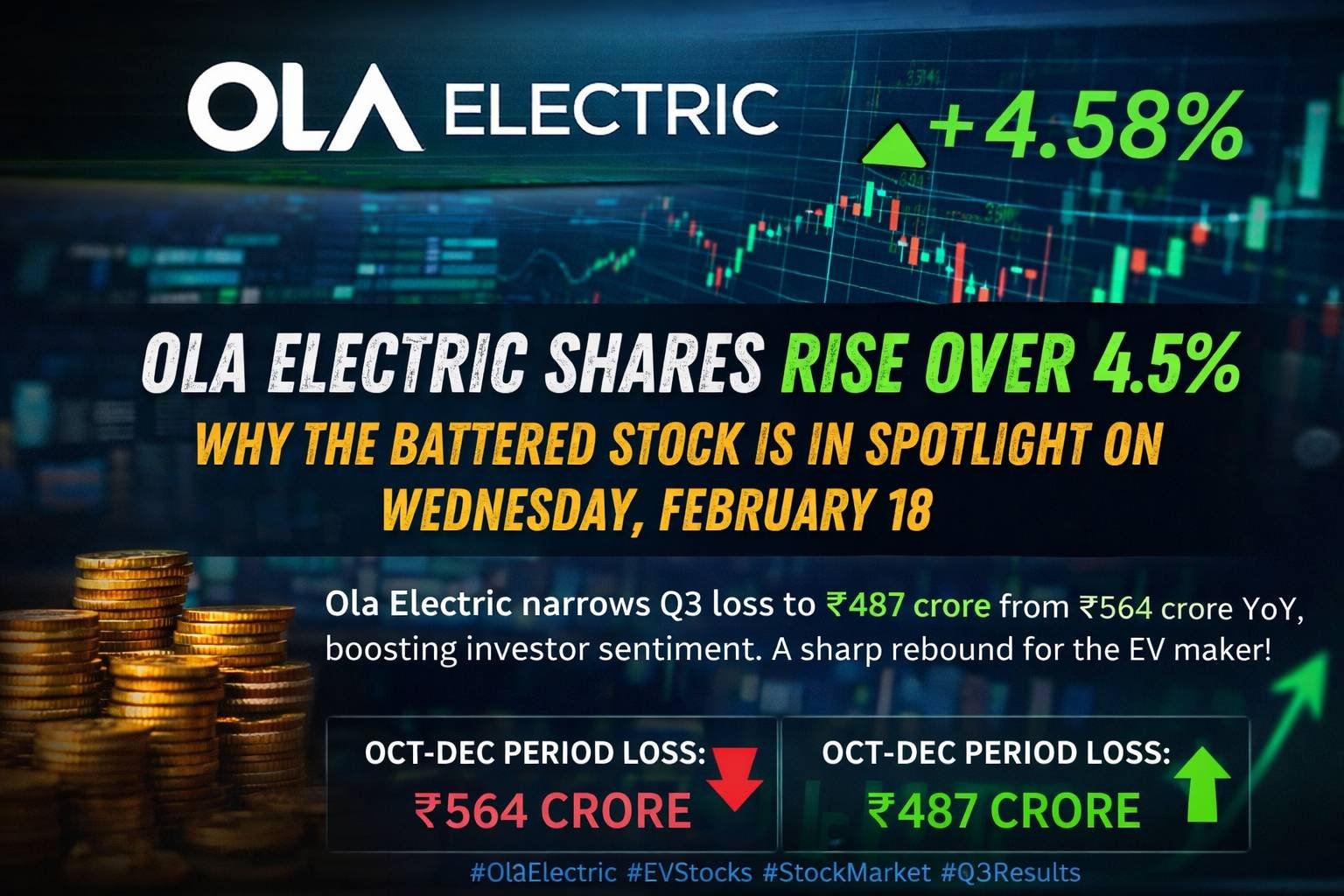
Ola Electric Shares Rise Over 4.5%: Why the Battered Stock Is in Spotlight on Wednesday, February 18
Introduction – Why Ola Electric Is Back in Market Focus
After months of relentless selling pressure, Ola Electric suddenly found itself under the market spotlight. On Wednesday, February 18, the stock jumped over 4.5% in early trade, surprising many investors who had almost written off the once high-flying electric vehicle (EV) stock.
So, what changed overnight? Was it a turnaround signal, a short-term relief rally, or just another market reaction driven by news flow? Let’s unpack everything — from legal developments to financial performance and analyst views — to understand what’s really driving Ola Electric’s stock movement.
Think of this move as a sudden ray of sunlight piercing through storm clouds. The sky isn’t clear yet, but investors definitely noticed the brightness.
Quick Snapshot of Ola Electric’s Stock Performance
On Wednesday morning, Ola Electric shares opened on a strong note. The stock surged as much as 4.6%, touching an intraday high of ?29.27 on the NSE. For a stock that has been battered for months, this sudden spike sparked immediate interest among traders and long-term investors alike.
Opening Trade Reaction
The early trade saw heavy volumes, suggesting strong buying interest. Traders rushed to capitalize on the positive sentiment, while long-term investors cautiously evaluated whether this move could mark the beginning of a recovery.
Intraday Highs and Trading Volume
High volumes usually signal conviction. In Ola’s case, it showed that the market was reacting strongly to two big developments — legal relief and Q3 financial results.
The Legal Relief That Boosted Sentiment
One of the biggest triggers behind the rally was legal relief granted to Ola Electric and its CEO, Bhavish Aggarwal.
Bombay High Court Stay on Warrant
The Hon’ble High Court of Bombay at Goa stayed a warrant issued by the District Consumer Commission, South Goa, against CEO Bhavish Aggarwal. This instantly eased concerns about potential legal complications and reputational risk.
Why This Legal Development Matters
Legal troubles often spook investors, especially when they involve top management. This stay order not only brought temporary relief but also sent a signal that judicial scrutiny might be more favorable toward Ola’s position.
The court even observed that the Consumer Commission may have exceeded its jurisdiction, which strengthened Ola’s case.
What Happened with the Consumer Commission Case?
The case stemmed from consumer complaints that escalated into legal proceedings, eventually leading to a warrant being issued against Ola’s CEO.
Background of the Case
Service-related issues and delivery delays had resulted in customer grievances. These complaints culminated in legal action, creating headlines and denting investor confidence.
Impact on CEO Bhavish Aggarwal
The warrant issuance against the CEO was seen as a major negative development. Its suspension now gives Ola breathing space to focus on business restructuring rather than courtroom battles.
Q3 FY26 Results – A Mixed Financial Picture
Apart from legal relief, Ola Electric’s Q3 FY26 results also influenced market sentiment.
Net Loss Narrows Significantly
Ola reported a net loss of ?487 crore, improving from ?564 crore last year. While still in the red, the narrowing loss suggests better cost control and operational efficiency.
Revenue Decline Raises Eyebrows
However, consolidated revenue from operations fell sharply by 55.02% YoY to ?470 crore, compared to ?1,045 crore in Q3 FY25. This steep decline raised serious concerns about demand slowdown and execution challenges.
Ola Electric Q3 FY26 Key Financial Highlights
Here’s a snapshot of the quarter’s performance:
-
Net Loss: ?487 crore (vs ?564 crore last year)
-
Revenue: ?470 crore (55% YoY decline)
-
Total Deliveries: 32,680 units
-
Gross Margin: Record 34.3%
Deliveries and Operational Restructuring
Despite weaker revenues, Ola focused on resetting its business model, realigning its retail footprint, cost structure, and service execution to adapt to slowing EV adoption.
Structural Reset – What Does It Really Mean?
Ola described Q3 FY26 as a “structural reset” quarter. But what does that actually mean?
Cost Structure Revamp
The company reduced operational inefficiencies, optimized supply chains, and streamlined retail presence to lower fixed costs and reduce its breakeven point.
Service Quality Improvements
Service complaints had hurt Ola’s brand image. The company is now focusing heavily on after-sales service and customer satisfaction, which is critical in the competitive EV market.
Record Gross Margins – A Silver Lining
One of the brightest spots in the Q3 report was the record consolidated gross margin of 34.3%.
Why Margins Improved
The improvement came due to:
-
Vertical integration
-
Gen 3 platform efficiencies
-
Tighter execution discipline
Impact of Vertical Integration
By controlling manufacturing, software, and supply chain, Ola reduced dependency on third parties, resulting in better cost efficiencies and profitability potential.
Citi’s View – Cautious Optimism or Hidden Warning?
Global brokerage firm Citi maintained a cautious stance on Ola Electric.
EV Market Slowdown
Citi noted that EV penetration in India’s two-wheeler segment is slower than expected, which directly affects Ola’s growth prospects.
Competitive Pressures and Challenges
Intense competition, customer perception issues, and service challenges continue to weigh on volumes. However, Citi acknowledged Ola’s improving gross margins and long-term operational improvements.
Sluggish EV Adoption in India’s Two-Wheeler Segment
Despite policy support, EV adoption hasn’t met expectations.
GST Cuts and Policy Shifts
Ironically, GST cuts on ICE vehicles have reduced the relative pricing advantage of EVs, slowing electrification momentum.
Consumer Hesitation and Market Reality
Concerns over charging infrastructure, resale value, and service reliability still deter mass adoption.
Why Ola Lost Market Share
Ola once dominated the EV two-wheeler market. So, what went wrong?
Service Issues
Customer complaints regarding delayed service and spare part availability hurt brand trust.
Rising Competition
Players like Ather, TVS, Bajaj, and Hero intensified competition, offering reliable alternatives.
Customer Perception
Negative social media sentiment amplified service-related problems, pushing potential buyers away.
Stock Price Trend – From ?157 to ?29
The fall in Ola’s stock price has been brutal.
Timeline of the Fall
The stock crashed over 80% from its all-time high of ?157 in August 2024 to around ?29 today.
Impact on Investor Wealth
This massive decline erased thousands of crores in investor wealth, making Ola one of the worst-performing stocks in the market.
Is This 4.5% Rise a Trend Reversal or Just a Bounce?
This is the million-rupee question.
While the rally looks encouraging, it’s too early to call it a trend reversal. The move could simply be a technical bounce backed by positive news flow.
True recovery will depend on consistent revenue growth, better volumes, and profitability improvement.
Future Outlook – Can Ola Electric Stage a Comeback?
Ola’s future hinges on three major pillars:
Strategy Shifts
-
Improved service execution
-
Stronger product lineup
-
Cost efficiency
Growth Catalysts
-
New EV launches
-
Battery tech improvements
-
Charging ecosystem expansion
If executed well, these could revive growth momentum.
What Should Investors Watch Next?
Investors should closely track:
-
Quarterly revenue growth
-
Delivery numbers
-
EBITDA improvement
-
Cash flow and debt levels
Any improvement here could fuel a sustained rally.
Conclusion
Ola Electric’s 4.5% jump on February 18 has certainly reignited interest in the battered stock. Legal relief for CEO Bhavish Aggarwal and signs of operational restructuring provided short-term confidence. However, weak revenues, slowing EV adoption, and intense competition remain serious challenges.
For now, the rally appears more like a relief bounce than a confirmed turnaround. Long-term investors should stay cautious, track execution closely, and wait for consistent performance before making big bets.
Sometimes, a single sunny day doesn’t end the monsoon — but it surely gives hope.
Disclaimer
The information provided in this article is for educational and informational purposes only. It does not constitute financial, investment, legal, or tax advice. Please consult with a certified financial advisor or a SEBI-registered professional before making any investment decisions. The author and publisher are not responsible for any financial losses or legal consequences incurred as a result of using this information
