Posted February 09, 2026
Week Ahead: India-US Trade Deal, Q3 Earnings, and FII Activity – Key Market Triggers to Watch
Introduction – What’s Driving Market Sentiment This Week?
If you’ve been tracking the Indian stock market lately, you probably felt the mood swing. One day, investors are nervous. The next day, optimism takes over. Welcome to the world of stock markets, where emotions change faster than weather forecasts. ?????
This week, the Indian markets head into a crucial phase, influenced by a powerful mix of global cues, corporate earnings, foreign fund flows, and one major catalyst—the India-US trade deal. After bouncing back from Budget day lows, the NIFTY50 has extended its recovery for a second straight week, giving investors fresh hope.
But is this rally sustainable? Or is it just a temporary relief bounce?
Let’s break down all the key triggers you need to watch in the week ahead.
Recap of Last Week’s Market Performance
NIFTY50 and Sensex Weekly Movement
Last week was nothing short of a roller coaster ride. The markets witnessed sharp volatility following the Union Budget announcement, with benchmark indices dipping nearly 2% in a single session. However, sentiment flipped dramatically after news broke about the India-US trade deal.
As a result:
-
NIFTY50 climbed 1.4% to close at 25,693.
-
Sensex gained 1.5%, ending the week at 83,580.
This rebound signaled that bulls were back in action, at least for now.
Performance of Broader Markets
The broader markets also joined the recovery rally:
-
NIFTY Midcap 150: Up 2% to 21,926
-
NIFTY Smallcap 250: Gained 0.6% to 15,864
This shows that buying wasn’t limited to just large-cap stocks; broader participation returned, improving overall market sentiment.
Sectoral Performance Snapshot
Sector-wise, the markets painted a mostly green picture:
-
Real Estate: +7.7%
-
Energy: +7.0%
-
Oil & Gas: +6.4%
However, not everything was rosy. Two sectors struggled:
-
IT: -6.9%
-
Defence: -0.1%
The sharp fall in IT stocks caught investors off guard, and we’ll dive into that shortly.
India-US Trade Deal – A Game Changer for Market Sentiment
Key Highlights of the Trade Deal
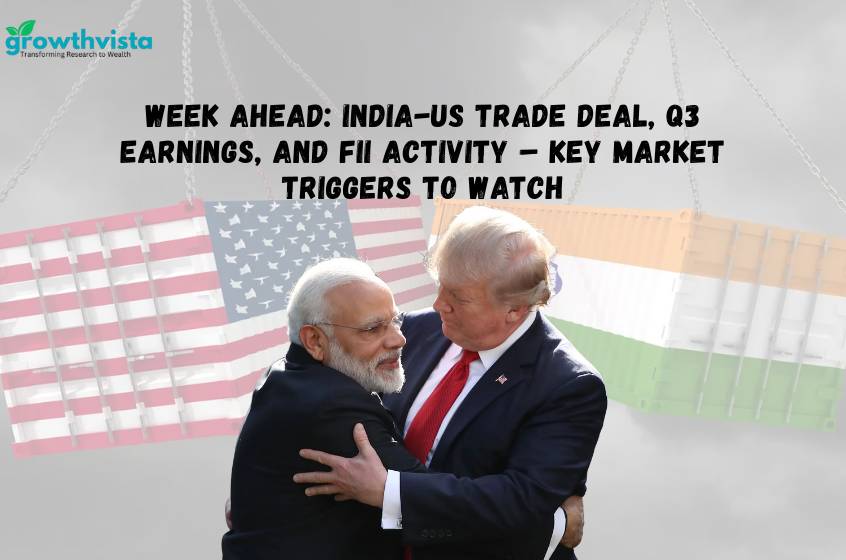
The turning point of the week was undoubtedly the India-US trade deal announcement. The United States slashed tariffs on Indian goods from 50% to 18%, removing secondary tariffs of 25% linked to Russian oil imports.
In simple words, this move significantly reduced trade friction between the two countries.
Impact of Tariff Reduction on Indian Markets
Lower tariffs mean:
-
Better export opportunities for Indian companies
-
Improved profit margins
-
Enhanced global competitiveness
This acted as a massive confidence booster for investors, triggering aggressive buying across sectors.
How Investors Are Interpreting This Deal
Markets love certainty, and this trade deal brought clarity. It signaled improved diplomatic relations, smoother trade flows, and long-term economic cooperation—factors that typically support equity markets.
Think of it as removing a big speed breaker from a busy highway. Suddenly, traffic flows smoothly again.
RBI Monetary Policy – Status Quo and Market Implications
Why Interest Rates Were Kept Unchanged
The RBI’s Monetary Policy Committee (MPC) decided to keep interest rates unchanged at 2.52%, aligning with market expectations.
This move reflects:
-
Controlled inflation
-
Stable growth outlook
-
Balanced economic recovery strategy
Impact on Banking and Financial Stocks
Rate stability is usually positive for banks and NBFCs. It ensures predictable borrowing costs and steady credit growth. As a result, financial stocks witnessed mild buying interest.
NIFTY IT Index Crash – AI Disruption Fears Explained
Anthropic’s AI Launch and Its Market Impact
The IT sector faced heavy selling after AI company Anthropic launched advanced workplace automation tools capable of handling:
-
Contract reviews
-
Compliance checks
-
Coding
-
Data analytics
This triggered fear that AI could disrupt traditional IT services, threatening revenue streams of Indian IT giants.
Why IT Stocks Witnessed Sharp Selling
Heavyweights reacted sharply:
-
Infosys: -7.3%
-
TCS: -6.9%
-
LTIMindtree: -5.7%
Investors worry that AI-driven automation could reduce outsourcing demand, impacting long-term growth prospects.
Key Global Triggers – US Inflation and Jobs Data
Importance of CPI Data
The US Consumer Price Index (CPI) is one of the most critical global data points. It influences:
-
Interest rate expectations
-
Dollar strength
-
Global equity flows
Higher inflation may delay rate cuts, which could pressure global markets, including India.
Labor Market Indicators and Their Market Impact
US labor data reflects economic health. Strong job numbers could reinforce hawkish monetary policy, while weaker data might boost equity sentiment.
Q3 Earnings Season – Stocks to Watch
Major Indian Companies Reporting Earnings
Several big names are scheduled to announce Q3 results:
-
Titan
-
Mahindra & Mahindra
-
Coal India
-
ONGC
-
Hindalco
-
Apollo Hospitals
-
Britannia
-
Grasim Industries
-
Eicher Motors
These results will heavily influence sector-wise momentum.
US Corporate Earnings and Global Market Cues
Global markets will also track earnings from:
-
Coca-Cola
-
Cisco Systems
-
McDonald’s
-
Ford Motors
Strong results may lift sentiment across global equities.
Market Breadth – Signs of Recovery?
Technical Breadth Indicators Explained
Market breadth measures how many stocks participate in a move. The percentage of NIFTY50 stocks trading above their 50-day moving average rebounded from the low 30s to nearly 50%.
What Rising Breadth Means for Traders
This indicates easing selling pressure and a short-term recovery phase, though caution remains necessary.
FII and DII Activity – Are Flows Turning Positive?
FIIs Derivative and Cash Market Positioning
FIIs reduced their short futures positions:
-
Long positions rose to 18–19%
-
Short positions declined to 81–82%
In the cash market, FIIs turned net buyers in February, purchasing ?694 crore, ending a seven-month selling streak.
DII Support and Its Market Impact
DIIs remained consistent buyers, investing ?2,892 crore, providing strong support during volatility.
NIFTY50 Technical Outlook for the Week Ahead
Key Support and Resistance Levels
-
Support: 25,500
-
Resistance: 26,000 – 26,200
As long as NIFTY holds above 25,500, the short-term trend remains positive.
Trading Strategy Based on Technical Setup
Buy-on-dips remains the preferred strategy, but aggressive long positions should wait for confirmation above resistance levels.
Sectoral Strategy – Where Should Investors Focus?
-
Bullish: Real Estate, Energy, Oil & Gas, Capital Goods
-
Cautious: IT, FMCG (due to valuation concerns)
-
Neutral: Banking & Financials
Risk Factors to Watch in the Coming Week
-
US inflation spike
-
Sharp FII selling
-
Weak corporate earnings
-
Geopolitical developments
Markets are like a tightrope walk—balance is everything.
Short-Term vs Long-Term Market View
Short-term volatility will remain high. Long-term investors, however, should view dips as buying opportunities in quality stocks, especially in growth sectors.
Conclusion – What Should Investors Do Now?
The Indian market is standing at a crucial crossroads. While the India-US trade deal has injected optimism, global cues and earnings outcomes will decide the next move.
For traders, disciplined risk management is essential. For investors, patience and a long-term approach remain the winning strategy.
After all, successful investing is not about timing the market—but spending time in the market.
Disclaimer
The information provided in this article is for educational and informational purposes only. It does not constitute financial, investment, legal, or tax advice. Please consult with a certified financial advisor or a SEBI-registered professional before making any investment decisions. The author and publisher are not responsible for any financial losses or legal consequences incurred as a result of using this information.
