Posted April 06, 2026
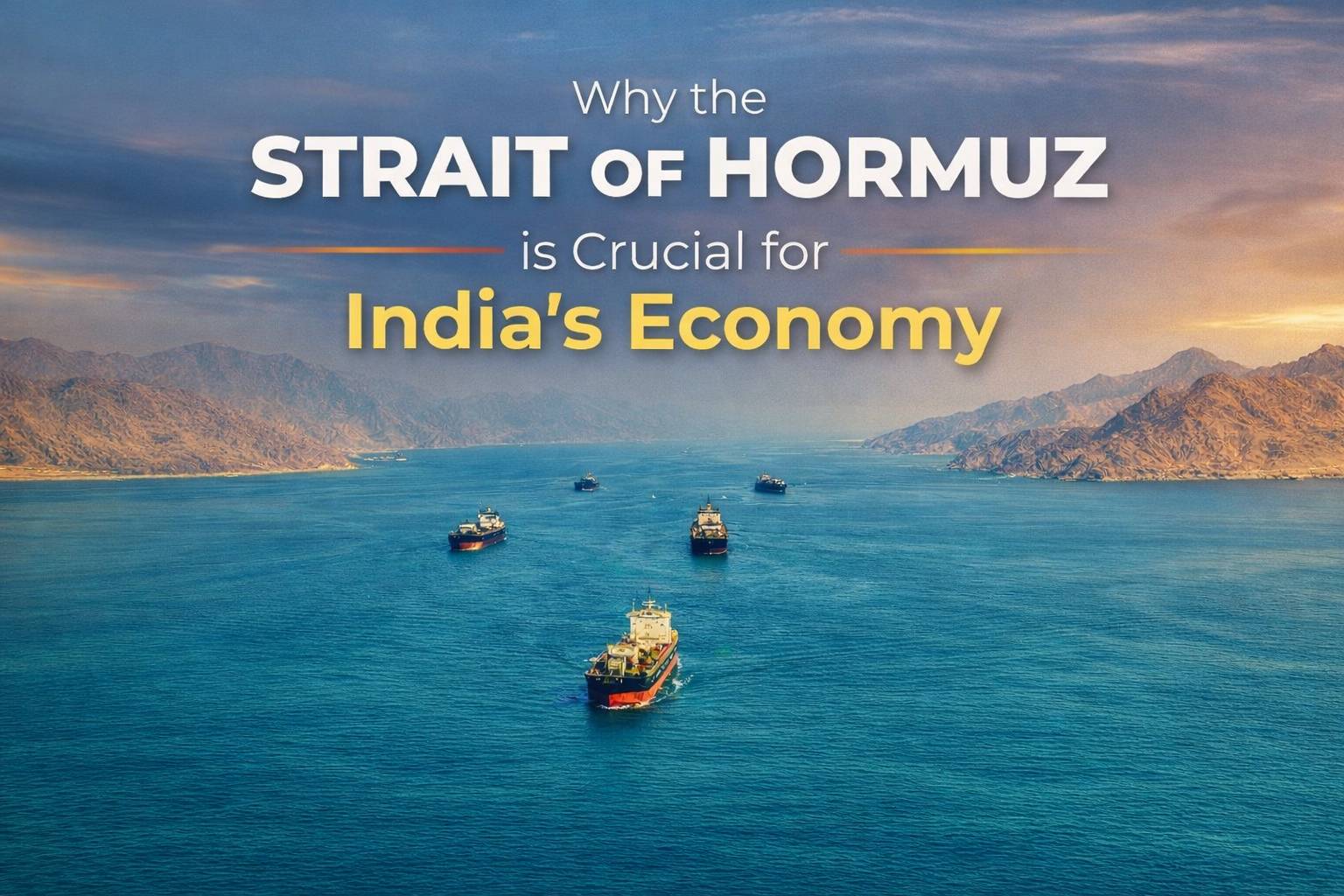
Why the Strait of Hormuz is Crucial for India’s Economy
The Strait of Hormuz is one of the most important maritime routes in the world. Connecting the Persian Gulf to the Arabian Sea, this narrow passage handles nearly 20% of global oil trade.
For a country like India, which heavily depends on energy imports, the stability of this route plays a critical role in shaping its economy, trade, and geopolitical strategy.
1. Backbone of India’s Energy Security
India imports more than 80% of its crude oil needs, primarily from Gulf nations such as Saudi Arabia, Iraq, and United Arab Emirates.
A majority of this oil:
- Travels through the Strait of Hormuz
- Reaches Indian refineries via the Arabian Sea
Benefit:
A secure and open Strait ensures uninterrupted oil supply, which is vital for industries, transportation, and overall economic growth.
2. Stability in Oil Prices & Inflation Control
The Strait of Hormuz directly impacts global crude oil prices:
- Smooth flow = stable oil prices
- Disruptions = sharp price spikes
Benefit to India:
- Lower oil prices reduce import bills
- Helps control inflation (fuel, logistics, food prices)
- Supports fiscal balance and economic stability
3. Lifeline for Trade and Shipping
Apart from oil, the Strait is also a major route for:
- LNG (Liquefied Natural Gas)
- Petrochemicals
- General cargo
Benefit:
- Enables smooth trade between India and Gulf countries
- Reduces shipping time and costs
- Supports India’s export-import ecosystem
4. Strategic & Defense Importance
Due to its global significance, the Strait is a key focus area for naval powers, including India.
India actively:
- Monitors shipping lanes
- Deploys naval assets in the region
- Protects Indian merchant vessels
Benefit:
- Enhances India’s maritime security
- Strengthens its geopolitical influence in the region
5. Impact on Indian Economy & Stock Market
Any tension in the Strait:
- Increases crude oil prices
- Weakens the Indian Rupee
- Impacts sectors like aviation, paint, FMCG, and logistics
Benefit of stability:
- Supports market sentiment
- Keeps input costs under control
- Helps corporate profitability
6. Strengthening India–Middle East Relations
The Strait facilitates strong economic ties with Gulf nations:
- Long-term oil contracts
- Trade partnerships
- Investments from Middle Eastern funds
Benefit:
- Boosts India’s global trade position
- Encourages foreign investments
What If the Strait Gets Blocked?
A disruption in the Strait of Hormuz could lead to:
- Sudden surge in crude oil prices
- Supply shortages
- Inflation spike in India
- Market volatility
This highlights how critical the Strait is for India’s economic stability.
In conclusion, the Strait of Hormuz plays a vital role in supporting India’s economic stability and growth. As a country heavily dependent on energy imports, India benefits significantly from the uninterrupted flow of oil and gas through this route, which helps maintain stable fuel prices and control inflation. Beyond energy, the Strait also ensures smooth trade connectivity with key Gulf nations, strengthening economic and strategic ties. Its stability directly impacts market sentiment, currency strength, and overall business confidence in India. Therefore, a secure and peaceful Strait of Hormuz is not just important globally, but absolutely essential for India’s long-term economic resilience and development.
